Yellow Fever Entry

This post is from the perspective of a Yellow Fever victim in 1793. Learn about her experience throughout the fever as well as the phases. Will she survive? Read to find out!

August 13th-16th, 1793

The Incubation Period of the Fever: Written on August 13th

I woke up to the beaming sun of Philadelphia, bright, beautiful, and promising. It was humid and hot, but talk of this “fever” was covering the town. My friend just perished of an obscure illness. It must have been a summer sickness, I assume. The city smelled of a rancid, rotten coffee stench. The smell intensifies with every step I take. The smells are noxious. They mustn’t be healthy.

August 17th- 20th

The Acute Phase: Written on August 17th

Today I woke up to beautiful Philadelphia once again. I strutted over to my murky window where the sun seemed bright, brighter than usual. Something had not felt right. I was feeling dizzy. My limbs ached and my head was warm. The light of the morning hurt my eyes, and they felt unusually sensitive to the bright sun. I was feeling feverish. I assumed that it was a common cold, or just an icky, summer sickness. I proceeded with my day performing my normal activities, leaving extra time for bed and rest.

At night time I prayed that my illness will be relieved before I drifted off to sleep.

August 21st- 22nd

Remission: Written on August 21st

I was correct yet again, my illness was nothing severe. Why did I ever think I had an icky summer fever? God must have listened as I prayed last night. He must have heard me as I told him to help. So, I headed downstairs to prepare the morning feast for my family. I made hoecakes with juice while my mother brewed some coffee for father. Yet again, all went according to plan and I was okay.

August 23rd-25th

The Toxic Phase: Written on August 23rd

“Poor girl,” my mother exclaimed. “Poor, young, innocent girl. She will never have the chance to become a nurse, teacher, or writer. She will never be able to live again.”

Today I woke up with an awful fever again. I vomited numerous times as my mother tried to feed me. I looked down at my hand. “Ahh,” I said, “my skin is turning yellow.” I felt short of breath and delusional as I stared at my uneaten and neglected meal. My nose was bleeding excessively, and I could barely move my muscles. I felt as if there was a hole in my stomach. My parents suspected that I caught the horrible illness that spread across our city, and that it was very severe. They knew immediately that they needed to seek help.

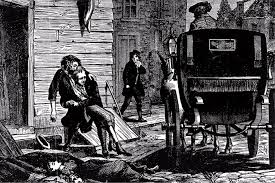
I went under the care of volunteer nurses lead by a coveted physician, Dr. Benjamin Rush. This treatment consisted of bloodletting, mercury, and other substances that “cure” the fever. The blood drawing was painful, more painful than any wound I have ever had. The mercury made me sick, sick like the time I saw my best friend dead. Sometimes I wonder if these substances are good for me, if they are healthy for my weak stomach. My parents mouths were agape as they slashed my arm to remove my blood. But people are dying constantly in the infirmary. I was used to the worrisome families.

August 24th

The fever was only exacerbating. I prayed every night in hopes that God would help me. “Are you listening?” I would say as I gasped for air. Please, save me. I drifted into darkness as I mutter my final words before sleep.

August 25th

Now, my fever is only improving. My symptoms are beginning to clear. The nurses believe that I will survive. After the last time, I don’t want to speak too soon. This fever is incredibly unpredictable. Constantly, I pray as I count my breaths before I drift into sleep.

August 26th

Recovery

After their usual reports, the doctors concluded that my fever is relieved. I survived the illness. The horrible, icky, unknown illness. They say that my survival is a pure miracle. I am beyond grateful for the nurses and doctors who assisted me, and for the people that haven’t fled the city yet. People were dying or falling sick day to day and the death tolls increased. I don’t know how to repay them, the ones who granted me survival.

My mother suggests that I stay isolated in my house for the time being. I beg her to let me go to the market to fetch some groceries, but she insists that I stay indoors. A lot of my closest relatives and friends have perished. The church bell continues to ring as Philadelphia continues to burn out.

We need to save The City of Brotherly Love. We need to preserve our Philadelphia, the one that was once “Wholesome and Never Burnt.” 

How Geographic Locations Affected the Result of Yellow Fever

Yellow Fever was a raging epidemic of the 18th century. The epidemic spread across Philadelphia, Africa, and the Carribean; but how was this epidemic influenced by history? What came before the horrible illness that wiped out Philadelphia?

The geographic origins of the Yellow Fever epidemic were all affected by revolutions around the world. All of these events were indirectly connected to the result of the outbreak in Philadelphia during 1793. Before the American Revolution, England ruled over the thirteen colonies in North America and shipped many enslaved Africans to do harsh labor. At a later time, the British Empire colonized West Africa. However, in 1775, the Americans revolted against the British forces for their independence. The 13 colonies—including Pennsylvania—fought alongside the French, and succeeded. Influenced by the success of the Americans, the French revolted against the monarchy. The French Revolution promoted an equal rights republic, which freed enslaved people in French colonies. One of these territories was Saint Domingue, now modern-day Haiti, an area populated with enslaved people that were dealing with the earliest strains of Yellow Fever. The American and French Revolutions gave the country’s freedom from Britain, but also affected the result of the Yellow Fever epidemic. 

Slavery in Saint Domingue had a great effect on the epidemic. The French Republic’s anti-slavery ideals lasted until Napoleon Bonaparte, a French general rebelled. With his power, he overthrew the French republic and attempted to restore slavery and slave trade in Saint Domingue and other colonies. The enslaved people revolted, and the French and British forces went to Haiti to begin the Haitian Revolution. Both of the European forces fought to gain control over Haiti, but they didn’t know that this revolution would directly lead to the Yellow Fever epidemic of 1793.

As the French and British traveled to Haiti, they were unaware of a sickness that was going to ravage both sides of the war. Before the Haitian Revolution, the British went to West Africa to colonize. While they were there, the British caught the most deadly strain of Yellow Fever. Mosquitoes are the insect that spreads Yellow Fever; they thrive in hot and humid weather. The climate of Saint Domingue made it a perfect breeding ground for the bug. The French, British, and Haitians all caught the fever, and soldiers were dying quickly. To avoid the chaos, French soldiers fled to Philadelphia. They came over on ships and brought with them the lethal strains of Yellow Fever. Without intention, they infected the entire city, wiping out 5,000 Philadelphians. The Yellow Fever epidemic that struck Philadelphia was caused by attempted colonization and successful revolutions around the world.


William Penn’s Promise to Philadelphia

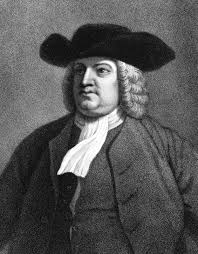
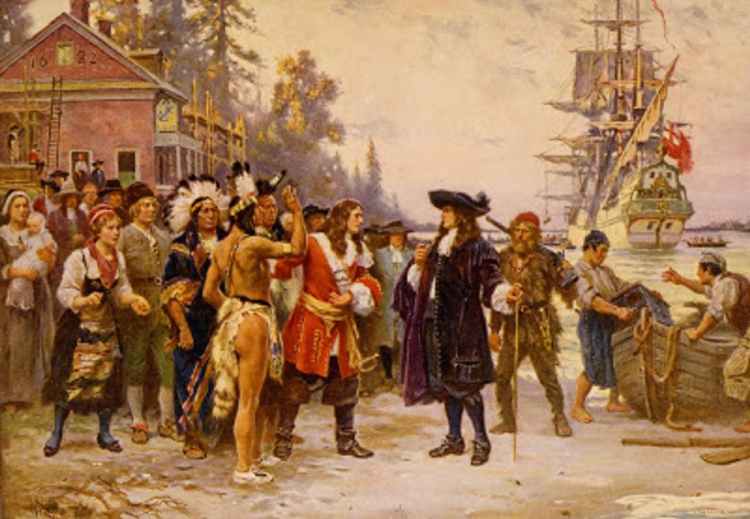
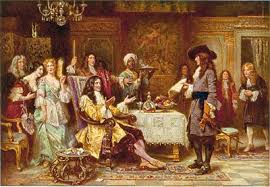
When getting out to create the canvas of Philadelphia, William Penn made a promise for religious and political freedom. King Charles II owed debt to his father, Admiral Penn. Penn was gifted a share of land West of The Delaware River as the payment. Young, lucky, and a novice, William Penn had the idea for a new city revolving around his Quaker beliefs, which would soon become a reality. He made a promise for political freedom and religious acceptance. Penn’s utopian dream was to create a city driven by Quaker ideals, a City of Friends, the city of Philadelphia.

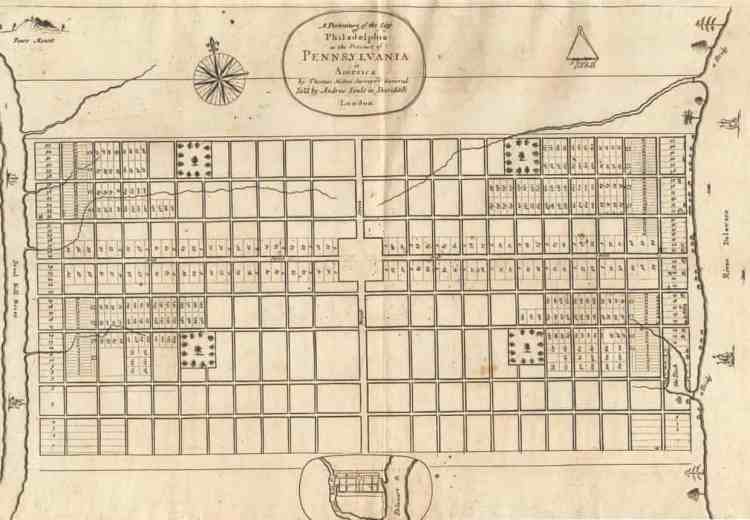
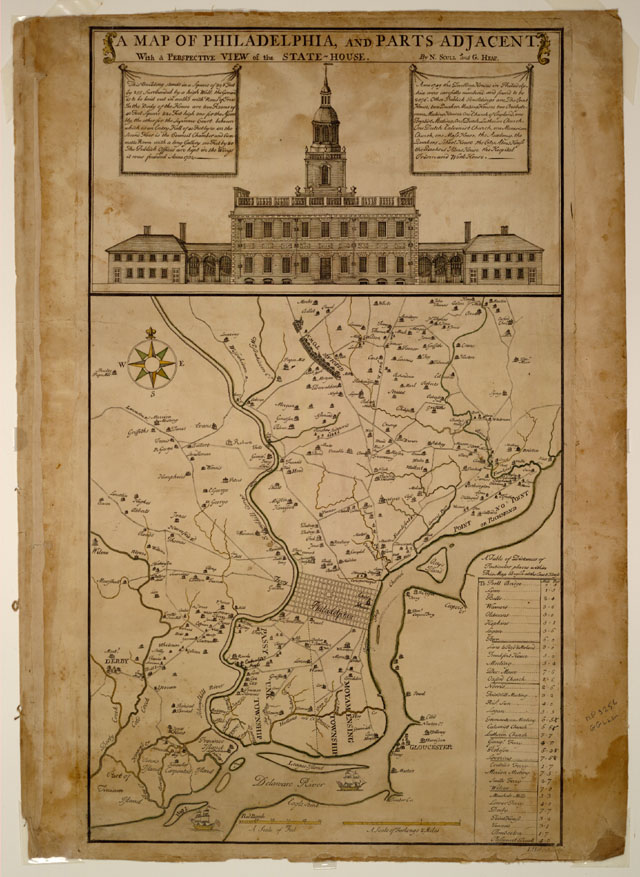
When creating Philadelphia, the idea of “Always Wholesome and Never Burnt” was in William Penn’s mind; the addition of Thomas Holme’s grid pattern did just that. The orderly map, running from river to river, reflected a distinctive town for the 17th century. The city was shown in a rectangular grid pattern, and the streets were perpendicular. By doing this, Holme and Penn intended to prevent plagues, conflagrations, and other disruptive disasters. Wide streets and square blocks were placed for the prevention of alleyways, which attracted misconduct. Dark alleys collected bacteria and human waste, increasing the chances of epidemics in the town. To avoid major conflagrations like the Great London Fire, Penn covered the city in green space. Thomas Holme’s city pattern promoted the principle of order, which the Quakers liked. The orderly grid pattern prevented many destructive events from occurring, making it important to Penn’s Quaker ideals.

William Penn’s Holy Experiment made Philadelphia a religious focal point. When living in England, William Penn was imprisoned  many times for his Quaker beliefs. Upon being freed by his father, he was granted the land of what was to become Philadelphia. In this city, he promoted religious tolerance and invited all persecuted religions, including Quakers. His plan succeeds, and would later become reality for all states among the U.S. 

While these ideas worked for a period of time, William was called to England to defend the rights of Philadelphia. When he is there, he is ordered to run England. Why would he choose to run a small colony over powerful England? Inevitably, he agrees. Back to England he goes!

When he is away serving his country, Philadelphians wreak havoc. Drunkards and rabble-rousers cut out alleyways, overcoming his utopian dream. Philadelphia became anarchic. When Penn arrives for a visit, he is disturbed. He attempts to save his utopian dream for the sake of Philadelphia. Political democracy erupts, and William Penn floats back to England never to return. He later passes away, making that the end of William Penn and his promise to Philadelphia.


Early Stages of Yellow Fever

Yellow Fever- a roaring, life-threatening epidemic that affected thousands of 18th-century people. But how did the Fever come to be; how did our people respond to the Fever? 

In the seventeenth century, the earliest, less-fatal strains of Yellow Fever arose in Saint Domingue in the Carribean, South to the U.S. At this time, the Fever didn’t spread much, and symptoms weren’t examined enough for it to be brought to anyone’s immediate attention. In the 1700s, Europeans came to the Carribean and were confronted with a new strain of the disease; consequently, people became aware of this widespread illness. In Saint Domingue 1791, the revolution of slaves began, war erupted between the French and British, and more Europeans transmitted Yellow Fever. People became aware and are recognizing the Fever as its deadliness ignites. If only a little sooner, they could have lessened the chances of more deaths. 

In the early 17th century, people didn’t expect an epidemic as severe as 1793; however, everything only got worse from there. In 1792, the worst and most deadly strain of the Fever was located to be in South Africa, a focal point for diseases at the time. Unaware of what was to come, the British evacuated their homeland to colonize there. Inevitably, they were exposed to Yellow Fever. They go to the Carribean in hopes of relieving the Fever, but just expose them to the horrible strain. Next, the French left Saint Domingue after the war and traveled to Philadelphia. They exposed many people to this horrific strain and sent the city into disruption. 

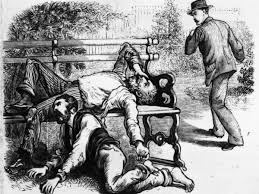
After a few months, Philadelphians began to recognize this problem because of the number of deaths lost to this “epidemic”; doctors and nurses began to investigate. Immediately, they assumed that it was due to miasma: the stench of the rotten coffee coming in on ports. Others suspected that it was brought in by cargo; others thought it was by incoming slaves. 

After many years of research and knowledge, Yellow Fever is now known to be a disease that is spread indirectly by mosquitoes. The bug spreads the virus by biting someone already exposed to the fever, to then bite another person exposing them to the infection. When the French came to Philadelphia with the Fever, the mosquitoes did just that; this lead to a growing epidemic. 

Large bodies of water and humidity are necessary to create ideal breeding grounds for mosquitoes; all of the places where Yellow Fever arose show a perfect climate for the bug. When bugs that are exposed to Yellow Fever breed new mosquitoes, the newborn is pre-exposed to the infection. Water makes for better breading, and more infected bugs. The Delaware and Schuylkill surrounded Philadelphia at the time of the Fever, and the hot August climate attracted the insect; the Carribean and West Africa suffered the consequences as well. This made the susceptibility of transmitting Yellow Fever in these areas common, turning the Yellow Fever epidemic into a widespread “conflagration” of a disease. 


The Growth of Philadelphia: Map Changes

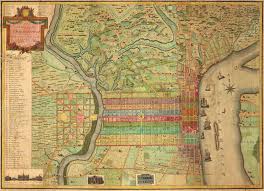
In science, we studied the adaptations made to Philadelphia’s map over time. We examined https://www.philageohistory.org/geohistory/ , and wrote about how the map evolved around the city’s needs.

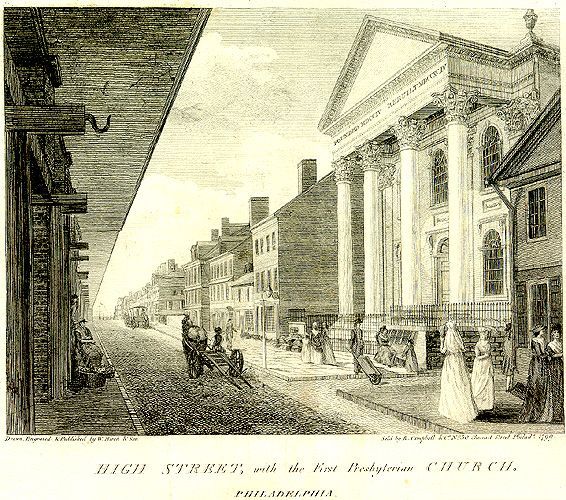
Since the establishment of our city, community members have adapted Philadelphia maps to meet the needs of the continually escalating population. Residents made it necessary to have accessible transportation, the exportation of goods, and a stable city structure; moreover, these are all aspects that affect a city map. In 1750, there was an increasing population of about 20,000 residents; this affected the structure of what was reflected on the city map. Philadelphia’s map showed a grid to help navigate through the growing city. The city is surrounded by The Schuylkill and The Delaware River for easy access to a water source. Due to a small population at the time, houses were named after the families that lived in them. There were barely any streets, and City Hall is in the same place that it is today. The popularity of the city grew, which lead to significant changes on the map. In 1855, with a growing population of 121,376 residents, the city was split up into wards and sections. A large population forced them to divide the city to create organization and sustainability. It also lead to much improvement in the development of streets to make transportation easier for Philadelphia’s citizens. Houses and roads were no longer named after families since the population increased, and important buildings were labeled on the map for navigation. Street names are now similar to today’s (Chestnut, Race, Walnut), and City Hall is still in the center of the city. Rittenhouse and Washington Square were shown on the map for navigation and recreational purposes. The development of Philadelphia greatly affected what is shown on the city’s maps. 

Philadelphia maps advanced continuously in the 18th- 20th centuries due to the growing population. In 1910, with a population of 1,549,008 people, Philadelphia showed a new city structure. A large population made exporting goods necessary; piers were built among The Delaware River for the start of the Industrial Revolution. Parks began to develop on the maps to be used for recreational purposes and filtration processes for dirty rainwater that will seep into the waterways. Railways are shown for transportation as many residents pile into the city, making Philadelphia a focal point. Basins and waterworks were constructed for the city’s water infrastructure because residents made stable water distribution necessary. Alterations to the map created Philadelphia’s history, inevitably affecting where our city is today. 


Design a site like this with WordPress.com
Get started