Levittown, Pennsylvania and Concord Park: Will a Suburban Utopia Ever Exist?

The Nice Try! Levittown/Concord Park podcast featured a description of the development of suburban homeownership in America, specifically under the context of the Levittown and Concord Park suburbs. The podcast poses the goal of a suburbian complex to be ideal and the question if “the suburbs ever succeed at becoming a utopia?” It is a question that has been raised for years now, and Concord Park was an attempted answer in the face of racism during the 50s.
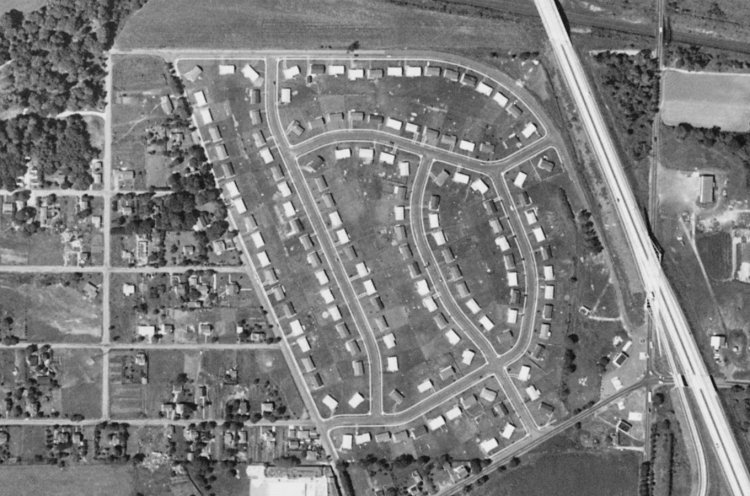
This is a birds-eye view image of Concord Park from the near sixties. This image is taken from https://placesjournal.org/article/housing-is-everybodys-problem/.


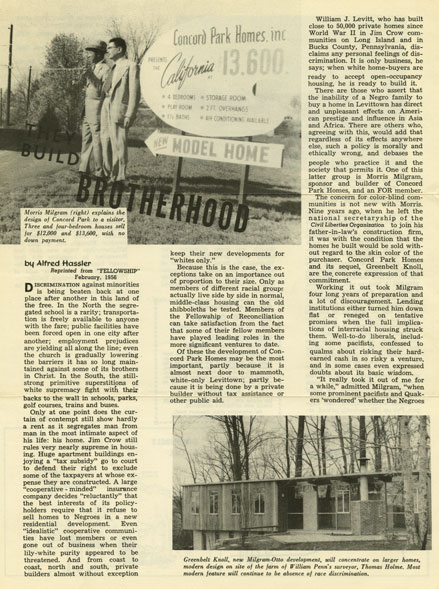
The American Dream is the powerful idea that an individual can experience success and freedom in this nation through diligent work. In the 40s and 50s, many believed homeownership was the main reward of this American dream, and that suburban communities gave Americans the opportunity of homeownership to live the ideal life. However, many seemed to use this “dream” as a way to root in institutionalized racism into the housing process. Buying a house was a brutal process for a black person in the 50s, and was purely set to give black buyers major disadvantages in the mortgage process. Levitt & Sons was one of the suburban development companies that strived to create the ideal suburban communities during the 50s. This specific company was the face of mass suburbanization in the 50s, making 30 houses per day at only 9,000 each. Despite their glory, they implanted racism into their Levittown (communities made by Levitt and Sons) community values by preventing black people from buying their houses altogether. According to the FHA, racially integrated communities were “difficult to manage” and “unstable,” and perfect suburbia was to be made up of only white people. But how can a place be a utopia if it is not inclusive? Morris Milgrim stood up against these racial boundaries and tried to create a place almost identical to the Pennsylvania Levittown and only 8 miles away. But here, everyone was included, and it was truly a utopian dream. This dream was achieved by a specific quota of 45% black people and 55% white people that made up Milgram’s community known as Concord Park.

“The bubble, I called it the bubble because when we moved outside of this community, that’s when we were all hit with the racism.” This is a quote from one of the past residents of Concord Park who was featured in the podcast. As this person describes it, Concord Park was the most utopian suburb ever to exist. An opera singer singing in the streets, children playing in the yard, and families bonding Concord Park was everything that one would think of a utopia. Here, black and white people were living together in harmony. But Morris’ efforts did not last forever. Morris Milgrim later planned to create yet another utopia in Illinois, until it received major backlash from the local residents. Milgrim sued them and lost. He was later questioned for his black-to-white quota because it was considered “forced integration.” In 1648 when the Fair Housing Act outlawed realtors from controlling who buys houses, white people moved out as black people moved in, ending the dream of integration in Concord Park.

Morris Milgrim’s attempt to create a fully integrated suburb was a dream that didn’t necessarily succeed, but it did manage to break some of the racial boundaries of the 1950s and 60s. Concord Park was an attempt to create a community that gave residents, black and white, a sense of serene peacefulness no matter what race they were. Despite the challenges that any person would have faced when attempting to create racial equality in the world in the 50s, I believe that Concord Park did succeed at creating a “utopia” during its glory days. The racial integration did not seem forced, but more welcomed and loved. If Concord Park was a place that brought separation from racism in the era of the 50s, in my opinion, it was a success.
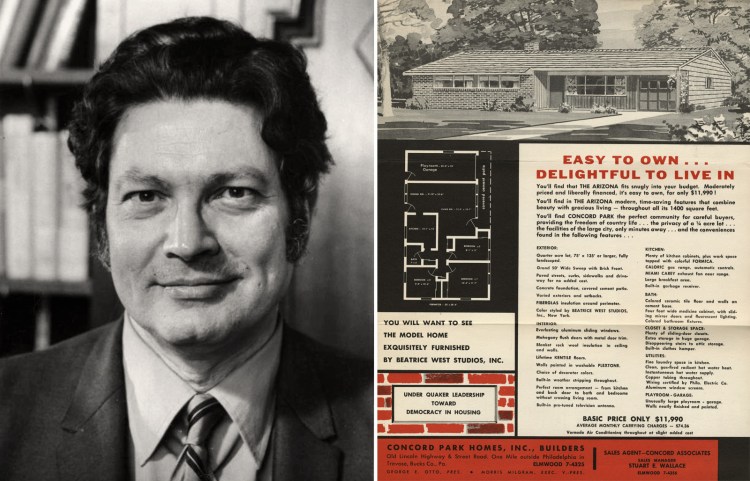
The second image to the left is taken from https://motleymoose.net/2018/05/08/9740/vnv-tuesday-a-tale-of-two-cities-concord-park-trevose-pa-5-8-18/. The picture featured shows an image of Morris Milgrim and his plan for a fully integrated suburb labeled Concord Park.

Nice Try! Levittown/ Concord Park: Utopia in our Backyard:

“I’ve come to understand and to believe that each of us is more than the worst thing we’ve ever done.”-Bryan Stevenson: Ted Talk

2.3 million people incarcerated, 7 million people on parole and probation, and 1 in every 108 adult was in prison or jail as of 2012. This is Criminal Justice in contemporary America. A system that is used to implant false justice into prisons so that it satisfies the witness and strengthens the profit of the prison. People are willing to overlook the fact that “each of us is more than the worst thing we’ve ever done,” in this situation, to comfort a witness and help the police. Bryan Stevenson, an American Lawyer, started the Equal Justice Initiative to fight against the injustices of today. The initiative focuses on unfair sentencing, racial injustice, and impoverished communities to help build an equal Criminal Justice System. 

This quote is taken from TED: “Because ultimately, our humanity depends on everyone’s humanity. I’ve learned very simple things doing the work that I do. It’s just taught me very simple things. I’ve come to understand and to believe that each of us is more than the worst thing we’ve ever done. I believe that for every person on the planet. I think if somebody tells a lie, they’re not just a liar. I think if somebody takes something that doesn’t belong to them, they’re not just a thief. I think even if you kill someone, you’re not just a killer. And because of that, there’s this basic human dignity that must be respected by law.”- Bryan Stevenson. 

This is an image of lawyer, social activist, and EJI contributor, Bryan Stevenson giving his Ted Talk about the injustices of today.

The Ted talk from Bryan Stevenson focuses on a person’s “identity” in the Criminal Justice System. Stevenson’s Equal Justice Initiative continues to break boundaries to fulfill equality and justice in the nation. Bryan’s ability stand against the injustices of today comes from this idea that a criminal is not just a criminal, and has an actual identity that should be respected by law. That a felon has dignity just as anyone else does, and it is not something that should be taken away when serving years in prison. That a criminal, despite their wrong-doings, shouldn’t be defined by the severity of their crime. A criminal’s life still has value. 

In today’s world, what depicts the amount of time one spends in prison is purely targeted at the severity of a crime and the condition of the criminal, rather than at the criminal’s past or their ability to recover. Some people are willing to put someone in jail for a life sentence without giving them a chance to re-enter the outside world for a second try at life. When in reality, that person has a meaningful life that is worth living. So rather than giving a criminal a chance to show who they really are, they let their crime and life in prison define them, when their human dignity should be respected. Many equal justice activists strive to change this notion for a “better world” and for the people who “are worth more than the worst thing they have done.”

This quote defies mass incarceration and the criminal justice system of today, which makes it so significant. Injustices and inequalities smother our modern criminal justice system, and people like Bryan Stevenson fight for a “better world” to abolish injustices and fulfill the dream of our nation. Teaching Americans, and even former inmates, to not overlook the idea that a person is more than their crime could change the Criminal Justice System and prison reform forever. The Equal Justice Initiative is a problem-solving idea that started with a big dream of equality. This idea and the EJI movement already do and will continue to defeat mass incarceration, give criminals a second chance, and implant justice within Americans. Bryan Stevenson’s belief that “we are more than the worst thing we have ever done” defies the modern-day Criminal Justice System to make society believe that a criminal is more than their crime. 

Here is the Ted Talk labeled “We need to talk about an injustice.”

America’s Most Notorious Penitentiary: Eastern State

In 1829, The Eastern State Penitentiary was built with the intention to carry on Pennsylvania’s solitary confinement system with greater efficiency than before. Nearly fifty years since its closure, Eastern State is still one of the most notorious penitentiaries in the nation. Tourists come from all over the world to get a feel of what life was like in a 19th-20th century high-security penitentiary. From famous inmates and cell blocks to escapes and captures, people can not seem to get enough of Eastern State. As a class, we went beyond the stone walls and took a more in-depth look into its past. 

The tour started with a walk through the gates where we found ourselves in the first alley of cells. In this alley is a former inmate and infamous 20th-century bootlegger Al Capone’s cell. The cell was adorned with lamps, paintings, and embroidered rugs. Our tour guide boasted the benefits of being a well-behaved inmate, and a wealthy one too. Al Capone was sent to Eastern State in 1929 after carrying a concealed, unlicensed weapon. He only stayed at ESP for a few months, and throughout that time was considered a privileged prisoner. However, what we were about to see was the opposite of privileged. 

We entered the center circle of the penitentiary, where we peered down each of the various rows of cell blocks. We walked into cell block eight, but then quickly turned down cell block two. While we were walking down cellblock two, my classmates and I got the chance to examine two of the conventional cells. The cell was only about 8 feet in width, and a toilet bowl, bed, and sink area filled much of the space. A small glass window located at the very top of the cell was the only view of the outside world that we had, and the stench of the old room filled our noses. It felt like pure isolation.

An engraving of Eastern State Penitentiary as it appeared in 1855. Its revolutionary wagon-wheel design, which allowed one guard to view all seven original cellblocks from a single spot in the rotunda, became a model for prisons, schools and hospitals all over the world

After we had the chance to examine a real prison cell, we got a small lecture about the severity of solitary confinement. We learned that the tiny cell led to an inmate’s patch of grass that nobody else could enter except for the inmate’s guard. If that isn’t enough, an inmate had to be covered with a mask at all times when they went outside. Before we made our final stops outside, we got a chance to see the exclusive cells where some of ESP’s past death row inmates were held. We all read a short blurb about Eastern State’s only successful escapee out of the 100 that tried, Leo Callahan. Leo Callahan was brought to ESP for attempted murder and assault. Today, he would be over 110 years old. 

Above is an image of Eastern State Penitentiaries only successful escapee, Leo Callahan. He escaped in 1923.

Despite the lengthy amount of time inmates spent isolated indoors, The Eastern State Penitentiary had an abundance of different recreational fields to explore. 30-40 feet walls surrounded each of the courts, and each was guarded by high-security watch towers when the prison was in use. We also viewed the tuberculosis yard and infirmary, along with a few facilities that survived to this day. 

Eastern State Penitentiary played a major role in the criminal justice system of the past. Today, the United States has the highest incarceration rate globally at 2.2 million people incarcerated and is bordering mass incarceration. To showcase the growing number of the incarcerated to the public sector, the people at Eastern State Penitentiary introduced a new crime and justice exhibit titled: Questions in the Age of Mass Incarceration, as well as the 16 feet tall “big graph.” The graph gives an example of the unprecedented number of people incarcerated in the United States since 1900, and a racial analysis for each decade. The companion exhibit sheds light on the topic of racial justice and mass incarceration, which gave my class an in-depth view of the modern criminal justice system. 

The tour of the Eastern State Penitentiary emulated past criminal justice systems in the eye of modern-day. The main takeaway from the trip is that prison reform and criminal justice are ever-changing systems. The prison system adapts based on time frame and will never conform to just one set of “rules.” The trip to the Eastern State Penitentiary gave us a personal view of what the brutal prison was like because, as Charles Dickens once said about the ESP: “…very few men are capable of estimating the immense amount of torture and agony which this dreadful punishment, prolonged for years, inflicts upon the sufferers.” 

This is an image of one of the cell blocks at the Eastern State Penitentiary. It is separated into many cells, and is two floors high.

Resources:

https://www.easternstate.org/notable-inmates

https://www.easternstate.org/explore/exhibits/prisons-today

https://www.easternstate.org/explore/exhibits/big-graph

Criminal Justice and the Pennsylvania System: Dreaming Big and Problem Solving

The Criminal Justice System, in its purest state, is the delivery of justice to the convicted. The ideal vision of criminal justice in society is one which is beneficial towards the convicted, where human engagement is generally improved through rehabilitation, prevention of any further crimes, and moral support for the well-being and safety of the victim. But as we border mass incarceration with 2.3 million people behind bars (minus those on parole or probation), it seems as if the Criminal Justice System is simply a way to instill false justice. This “justice” is provided at the expense of the convict, who is quickly put behind bars, while the witness and police receive satisfaction for the jailing. Ultimately, many are willing to overlook the innocence of criminals in search of this fake justice, which comforts the witness, and bolsters the public image of the police department. As time goes by, society will continue to change the theories behind what is justice for a criminal and the victim. So, if we have come as far as to say that we have the highest incarceration rate globally, where did this all start?

The general idea of prison reform and criminal justice has come a long way since its beginning. One great example of the growth of prison reform is the Pennsylvania Prison System. Before the 1700s, the goal of criminal justice was for the convicted to get a retributive punishment for their crime. Penalties include the death sentence for the worst crimes, while other crimes ended in hanging, ear cropping, beheading, burning, public humiliation, and branding. In 1680, the first acts to end the current prison system were attempted but later failed due to the death of their creator, William Penn. It wasn’t until the birth of the Pennsylvania System that the Quakers finally got what they asked for. 

In 1787, Benjamin Franklin and a group of Philadelphian Quakers joined forces to create what was the Philadelphia Society (later became the Pennsylvania Prison Society). The Quakers offered a problem-solving approach to the brutal criminal justice system of the 17th-18th centuries. The Pennsylvania Society was an attempt to focus on incarceration and rehabilitation rather than retribution and deterrence. The Pennsylvania System was a major jump in prison reform, so its ability to raise doubts from the public was unknown. 

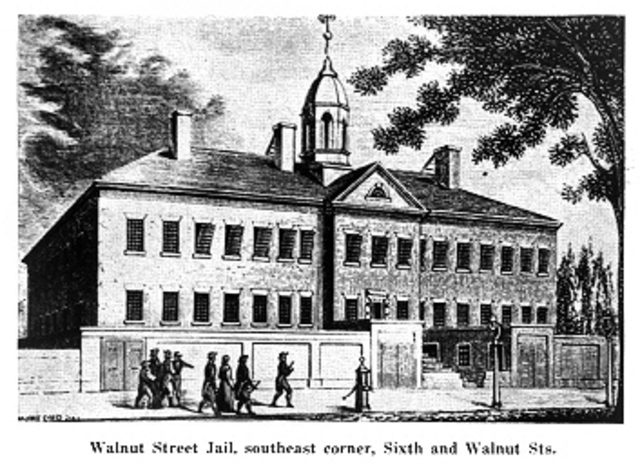
The Philadelphia Prison Society converted the Walnut Street Prison into the nation’s first penitentiary for rehabilitation, in which one was held in complete isolation or “solitary confinement.” This system was called the “Pennsylvania System.” The ideal purposes of this system was to give inmates time to reflect on their deeds and indulge in remorse, and (similar to today’s) to prevent criminals from committing further crimes after being released. They did so by occupying inmates with work. The prison was built to have one person rooms with little window space to view the outside world, and inmates would see nobody but their guard. They were given tools to make shoes, clothes, and nails, but nothing else. At first glance, outsiders showed enthusiasm for the new system. For all they knew, criminals were off of the streets. But step inside of the prison walls, and enthusiasm was the last thing that you would see. 

This is an image of the Walnut Street Prison Prior to its closure. It is located on 6 and Walnut Streets and is still standing to this day. Taken from https://www.timetoast.com/timelines/32856, article: Education in US Prisons

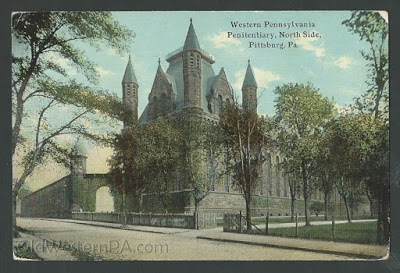
Despite the initial successes of the prison, the high expenses lead to major overcrowding. Forty inmates were stashed into fifteen by fifteen-foot rooms at a time, and the once “ideal” prison system was beginning to fall apart. To solve the crowding issues, the Walnut Street Prison was then split into two larger prisons, named Eastern State and Western State Penitentiary. Both penitentiaries followed the same solitary confinement system as Walnut Street Prison until the Western State Penitentiary failed to continue it. Eastern State somewhat succeeded at maintaining the solitary system until it converted to the congregate system in 1913. Questions about the effects solitary confinement rose as evidence showed inmates going mentally insane due to the lengthy amounts of time spent isolated. So, did the Pennsylvania System succeed at what it was set out to do?

Even though the Pennsylvania System didn’t succeed at surviving, it succeeded at playing a major role in America’s prison reform systems. The problem solving and ambitious dreaming done by the Philadelphia Society members shifted the main focus of criminal justice from retribution to rehabilitation. The Pennsylvania System set the stage for prison reform around the nation. Whether or not it succeeded, it is easy to say that the Pennsylvania System kickstarted the act of prison reform and gave America a staggering new perspective of the Criminal Justice System.

This is an image of the Western State Penitentiary taken from http://www.oldwesternpa.com/2016/04/western-state-penitentiary-brief-history.html

Resources:

https://www.cor.pa.gov/PCI/Pages/History.aspx

https://study.com/academy/lesson/the-pennsylvania-prison-system-history-reform.html

https://www.smithsonianmag.com/history/eastern-state-penitentiary-a-prison-with-a-past-14274660/

Yellow Fever Walking Tour Project

Eleni Murphy

Yellow Fever Walking Tour Project

Benjamin Rush House

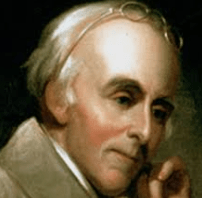
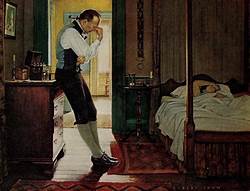
Dr. Benjamin Rush was a leading figure during the Yellow Fever epidemic of 1793. He turned his house into a makeshift hospital when the Pennsylvania Hospital began to reject Yellow Fever patients. While practicing in his hospital, he began developing his heroic treatment. This intense treatment included bloodletting and the purging of the body. To some, it was considered dangerous, and many physicians called him a murderer. Despite this, Rush stuck to his principles and practice. His hospital was the reason for many Yellow Fever survivors. He is now remembered as a “glorified hero” for staying in Philadelphia throughout the fever. The Benjamin Rush House is a historic location that held the sick patients of Dr. Rush during the Yellow Fever epidemic. 

Dr. Rush already had a leading role in society before the epidemic struck Philadelphia. He was a member of the Continental Congress from 1776-1777, an American political leader, and a physician. He was one of the youngest signers of the Declaration of Independence. As an active follower of the First Principle of Equality, he was a well-known slavery abolitionist. He published many writings, one being The Syllabus of a Course of Lectures on Chemistry, the first American course on the topic. Dr. Rush’s experience as a physician and political leader led him to become an important figure during the Yellow Fever epidemic. 

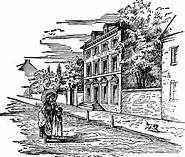
Benjamin Rush’s house was a typical Philadelphia home until it was transformed into a hospital during the epidemic. His three-story house was built in the center of Philadelphia and was an ordinary 18th century home. But when the epidemic began to wipe out the city, the house became extraordinary. The Pennsylvania Hospital started to reject Yellow Fever patients. Death rates were increasing, and Yellow Fever victims didn’t have the proper care. Dr. Rush decided to turn his house into a makeshift hospital for the ill. In his hospital, he practiced the heroic treatment. Patients were able to be treated by a qualified physician when the main hospital turned them away. The Benjamin Rush House went from being a family home to a temporary hospital during the Yellow Fever epidemic. 

Upon working on his at-home hospital, Dr. Rush was creating his own cure for the fever called the heroic treatment. He finished developing it by October. It was an intense treatment that included high amounts of bloodletting and purging. To purge the bowels, Dr. Rush fed his patients mercury and jalap. Even though Dr. Rush was a trusted physician, his techniques created great controversy. His treatment was considered overly aggressive and dangerous. Some said he removed to much blood from the body to the point that he was charged for murder. “…his purges were meant for a horse, not a man, and that he had waded through the epidemic in a bath of his patients’ blood.”(Binger, page 227). Despite this, Dr. Rush continued to treat patients with his heroic treatment. He believed that these techniques decreased morality. Although many considered the heroic treatment to be dangerous, Dr. Benjamin Rush stuck to his original plan and continued to treat patients the heroic way. 

Many Yellow Fever victims were saved by Rush’s heroic treatment in his hospital. Because of his hospital, around 57% of his patients survived the fever. Although many of his patients died, the heroic treatment ended up saving an impressive amount of Philadelphians from death. Ever since the white flag was hoisted over Bush Hill signaling the end of the epidemic, he has been remembered as a hero, not a murderer. For many, Dr. Rush’s heroic treatment in his makeshift hospital was the difference between life or death.

The Benjamin Rush house had an important role during the Philadelphia Yellow Fever epidemic. Dr. Benjamin Rush, a leading physician, turned his home into a makeshift hospital for the ill. Yellow Fever patients received his aggressive heroic treatment, including bloodletting and purging. It created great controversy, and some described it as inhumane. Nevertheless, Rush continued. “I have resolved to stick to my principles, my practice, and my patients to the last extremity.”(Benjamin Rush). He worked endlessly to improve his treatment. The heroic treatment and his hospital saved some of the patients from death. Some say he is a “glorified hero” for sticking with his patients throughout the fever when the other physicians fled. His hospital, although it looks like an ordinary home, played an extraordinary role in history. The Benjamin Rush House was the reason for survival for many Philadelphians during the Philadelphia Yellow Fever epidemic of 1793. 

A Visit from Officer Whitehead

Visit from Officer Whitehead

Juvenile Justice Officer

Officer Whitehead, a juvenile justice officer, entered our history room ready to reveal her journey from a medical officer to the juvenile probation system and every detail in between. For my peers and I, we were previously working on a prison system unit, and were urging to hear the perspective of a real officer in the city. During the thirty minutes spent with Officer Whitehead, we learned about our city revolving around crime rates and juveniles.

Whitehead has years of her experience under her officer belt. Serving in Philadelphia for over 10 years, Officer Whitehead knows the city inside and out. When she entered our classroom, she showcased her weapons, including her taser, nine ml handgun, and nightstick. These weapons also come with tragic and triumphant stories, that Officer Whitehead was willing to share. For example, the time that she was once threatened with a gun, and had to use her own for her safety. These are circumstances that my classmates and I have never been through, so we show great gratitude for people like Officer Whitehead who are willing to risk their lives for the well-being of Philadelphia citizens.

Not only did Officer Whitehead tell us the glory of her job, but she also spoke of her police officer conscience, and how she deals with her job emotionally. What resonates with her are the days that she needs to use a weapon on a person, which is something that most people forget about juvenile justice officers. An officer still remembers when he or she needs to harm a person, just as it would a regular person.

Our experience with Officer Whitehead gave us a new perspective of Philadelphia’s prison system. The experiences that she has been through show us that we are safe and protected in a high risk city, and that people like Officer Whitehead are always willing to help Philadelphia residents like my peers and I.

History: Prison Maps Blog Post

Architecture plays a crucial role in the making of an effective prison. In the United States alone, we imprison more than 2 million people per year, and the number continues to rage on. While our country borders mass incarceration, new prisons are being constructed everywhere. To prevent overcrowding, prison architects take years to predict, construct, and fill a prison. On www.prisonmap.com, we explored the differences between prisons around the country to see how prison architecture varies depending on the prisons needs. 

Every single prison around the world is unique, different, and distinctive when compared to others. This prison (shown below) is just one example of prison design and shows the ideal structure for safety, surveillance, and recreation. Large patches of green space and woods provide separation from society that many would expect from a prison. However, there is one thing that makes this prison unlike most, and that is that it borders a suburban community. A wall of trees blocks the prison from the domestic area, and eases any concerns that residents would have about their safety. The borders enclose numerous buildings that make up the prison. The main facility is divided into sections, and green space intervenes with the structure of the building. When a prisoner leaves their cell, it is likely that they will have the opportunity to step on a patch of grass to breath in fresh air, which is something that is not offered at other correctional facilities. To make circulation around the prison easier for officers, each building has road access. The lengthy roads circle around the main facilities and branch off into the side buildings. Because of the large amount of land shown on the map, prisoners have a lot of space for recreational activities. To ensure safety and protection for outside citizens, the prison has a long entryway. From the long roads to the main facilities, this prison layout is distinctive. From a birds-eye view, the structure of this prison is well-developed, effective, and, most importantly, safe.

Designs For Different Futures Blog Post

The future–often characterized by shiny, glassy buildings, insane flying cars, or advanced robot citizens. It is said to have technologized jobs, fancy food, and immense resources and materials. Will the future be all that everybody says it will? How will the future really seem? The Designs for Different Futures exhibit featured at the Philadelphia Museum of Art offers a new, and somewhat alarming, view on what we will see in the future. “I feel like there is no limit,” one said as they entered the exhibit. For the artists featured in the exhibit, no limits were in the way when they crafted their designs. Big dreaming and problem-solving were what made the inventions so monumental. They were crafted to exhibit the future, solve problems, and make things efficient for younger generations. All of the inventions displayed at the Designs for Different Futures exhibition were made through problem-solving and dreaming big for an efficient tomorrow. 

Shown at the Philadelphia Art Museum, the seaweed textile is just one of the ingenious inventions that exhibits problem-solving and big dreaming. The seaweed textile is a stylish shawl made almost entirely out of seaweed. The creator intended to make a resourceful yet modern way to make clothing. As many know, producing a piece of clothing takes large amounts of water that could be used for more valuable things. A French fashion designer in Europe took a stance at the world-wide problem and crafted a shawl that uses less water than before with a new ingredient, seaweed. The seaweed textile offers a new, problem-solving way to save water during clothing production.

How does this invention anticipate the future? How does seaweed clothing affect our well-being? Seaweed is easily found in oceans, but typically not in clothing. We are all familiar with seaweed and know that it is nothing futuristic or technological. But with population growth and only a certain amount of resources, sustainability is something that needs to be considered for our future. The Seaweed Textile has the potential to save water that would be wasted on regular clothing production while providing a useful and durable piece of attire. The seaweed textile exhibited at the Designs for Different Futures exhibit shows a new, futuristic way to view sustainability for our future. 

This is the seaweed textile shown at the Philadelphia Art Museum. It is a shawl/scarf made almost completely out of seaweed. The main purpose of this invention is to reduce the amount of water that goes into producing a piece of clothing. 

Seaweed Textile, 2019, by Violaine Buet. Photo by Juan Arce, courtesy Philadelphia Museum of Art, 2019.

Found at the exhibition as well, the PhoeniX Exoskeleton is another remarkable invention that peers into our future. It is a robotic suit powered by batteries that are held in the back. Undeniably empowering, this robot-operated machine can help disabled people walk. The exoskeleton is a creation like never before. One of the biggest problems among disabled people is the inability to walk. The creator, Homayoon Kazerooni of the University of California, Berkely, intended to craft something that would excite the disabled community. Already, this creation has grasped the attention of many who are impaired. It has the potential to reach out to other disabled people in the future, which can solve the problem of immobility. “It gives a better quality of life,” Kazerooni said. Already helping the lives of many, this computerized invention will continue to empower others, giving them a better quality of life.

This is an image of the PhoeniX Exoskeleton that was on display at the Philadelphia Art Museum in the Designs for Different Futures exhibit. It is equipped with a battery pack carried around on the back. Two walkers are for the arms of the person. The suit easily slips on to whoever is using it and is adaptable to size. This invention can help disabled people walk. 

  Another invention created through big dreaming is “Invisible”–a young female’s problem-solving response to stolen DNA. The product is on display among many other monumental devices at the Designs for Different Futures exhibit. Your DNA can be found on your cups, hair, and even chewing gum, to later be stolen and cloned, tracked, or analyzed. The creator of Invisible, Heather Dewey Hagborg, was first alarmed about these dangers when her curious colleague experimented with DNA. He found gum, cups, and hair off of the raging streets of New York and used the data to recreate the faces of people. To Heather’s surprise and concern, the recreations were almost entirely accurate. She created her problem-solving invention with the intention of protecting from DNA thieves. Invisible is a life-changing discovery that was sparked through problem-solving and big dreams for the future of DNA protection. 

How will Invisible benefit the future of DNA protection? Invisible is an invention with the potential to end the problem of DNA thieves globally. It is a two part system, consisting of the “erase” and the “replace” sprays. The “erase” spray removes 99.5% of DNA remaining on a surface, and the “replace” spray blurs the other .5%. With its one-of-a-kind ability to erase DNA, Invisible has the potential to end the problem of stolen DNA. Stolen DNA is a startling thing alone, but thieves might take this data and track, analyze, or clone you. This could lead to tremendous disasters that would damage the lives of many. When Heather Dewey Hagborg formulated Invisible, she dreamed big and solved a large problem that would otherwise harm our future. Many problems will arise in our future, and Invisible is just one response to a problem that will change our future. 

This is Invisible, the DNA removing spray that was on display at the Philadelphia Art Museum. The bottle to the left shows “erase,” the spray that removes 99.5% of DNA left behind. The bottle on the right is “replace,” the spray that obfuscates the remaining .5% of DNA left behind. This invention has the potential to protect from DNA thieves.

Many think of the future as a place with enormous buildings, hovering cars, and robot-operated jobs. The Designs for Different Futures exhibit featured at the Philadelphia Art Museum made us, my class, view the future differently. It gave us a new, refined perspective on how inventions will seem in years to come. The inventions were more focused on being problem-solving than being bigger, better, or more advanced. They all were made through big, limitless dreams to change the world. The monumental inventions displayed at the exhibit were crafted to solve-problems, offer new ideas, and make things easier for us. The Designs for Different Futures exhibit featured at the Philadelphia Art Museum displayed new inventions that were made from big dreams to solve problems and make the future a better place.

Philadelphia’s Answer to Yellow Fever

Yellow Fever was a catastrophic epidemic that affected Philadelphia greatly. The city was doomed to fail. How did Philadelphians react to the fever? What was their solution? Why did they persevere when they could have abandoned the city?

“How can we use this to help propel us forward.” This was the idea that spread across Philadelphia after the Yellow Fever epidemic of 1793. After the fever, the city was in a crisis. The deadly epidemic swept away Philadelphians right as the illness crossed our shore. It wasn’t until late October that death rates decreased, and by that time around 4,000-5,000 Philadelphia residents lost their lives to the epidemic. The only way to save their city was to reshape William Penn’s utopian dream for a neighborly, clean, and safe city. Would this be the correct answer to the Yellow Fever epidemic? Could Philadelphia reshape what they were before 1793?

The Yellow Fever epidemic spread easily across William Penn’s five original squares. These areas were dumpy, dirty, and focal points for water to compile. The water created perfect breeding grounds for infected mosquitoes. After the fever faded, Philadelphians renewed the squares and turned them into recreational areas, and restored Penn’s original plan for a “nature-filled city.” 

After the epidemic, Philadelphians were determined to create better medical conditions for the city. Just as the plans for a “new” Philadelphia began, members of the College of Physicians began to improve innovation, experimentation, and research in the city. New knowledge and strategies will help prevent other epidemics like Yellow Fever. After the fever, Philadelphia also developed a board of public health. This public board would notify and investigate the city if there were another epidemic. 

The improvements made after the Yellow Fever epidemic have all helped with the well-being of the city today. If Philadelphia never renewed the five squares, they would still be filled with waste and dump. Now, they are used as tourist sites and recreational parks all around the city. The squares no longer spread epidemics!

The research, innovation, and experimentation by the College of Physicians helped advance Philadelphia’s medical conditions. The Physicians involved influenced where the city is now in terms of treatment and vaccinations of epidemics. Now, vaccinations prevent us from dealing with horrible illnesses like Yellow Fever. 

The Board of Public Health was established to notify and educate Philadelphians on epidemics. It is still functions similarly today. The Board of Public Health helps us stay protected from illnesses that might spread around the city. They also offer vaccinations for local Philadelphians. 


Yellow Fever from the Perspective of Dr. Benjamin Rush

This passage is written from the perspective of Dr. Benjamin Rush. He was a political leader, respected physician, and was considered the “smartest man in America.” These are his leading beliefs on Yellow Fever during 1793.

Welcome physicians, congressmen, and fellow Philadelphians. I am Benjamin Rush, a respected physician, signer of The Declaration of Independence, and a Revolutionary War medic. I have promoted anti-slavery acts and established a Pennsylvania Hospital in the city of Philadelphia, for goodness sakes. I have the treatments, theories, and truths that you want. I know what is best for Philadelphia.

Those French physicians think that the French Refugees brought it over through cargo. I have never heard anything more false! Mr. Deveze, Mr. Girard, Dr. Currie, and—surprisingly—Mayor Clarkson are completely incorrect. How could people believe such utter nonsense? These inexperienced fools are out of their minds. There is no other cause than miasma. I am livid! 

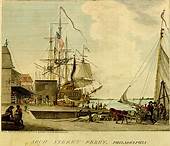
It is typical to find illness in the summer. However, the constant deaths that this August caused are not normal. The cause is surely miasma. My theory is that the rancid, rotten coffee smells coming from Arch Street Wharf are what is causing the epidemic. The smell fills the air of the city. The fever began on the day that the coffee stench filler the city. It only makes sense that me, the smartest man in America, is correct! 

These men are plain wrong. They think that the best way to cure the fever is through “Palliative Treatment.” They feed them wine and water, and force them to lay in bed for hours at a time. This treatment is idiotic and useless. How does he think that doing nothing will treat his patients? How is this supposed to cure an illness so severe? People are sick with an epidemic, and passive treatment is not what they need! These men will flee the city anyways.

To cure the fever, we must remove the infection from the blood by purging and bloodletting. This is called my, Dr. Benjamin Rush’s, heroic treatment. We must drain the blood of the patient, and then feed them mercury. The mercury will purge them, and they will vomit out all of the illness. This is the only way that we can relieve the fever. Call me a murderer all you want, I will stick to what I know!

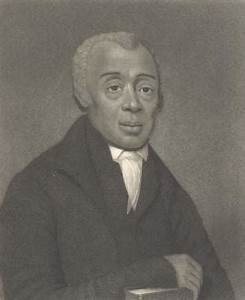
I recently discovered that the number of African American deaths to the fever are slim. They are immune! I told my idea to Dr. Richard Allen, but he was skeptical. I ordered them to be nurses. This is the solution! They are to perform my heroic treatment to all of the patients under my care. This is the only way that we can save Philadelphia without killing our nurses in the process. 

These are the theories and solutions that will save our city! Don’t you want the the church bell to stop ringing? Don’t listen to the foolish French physicians, listen to me, Dr. Benjamin Rush!


Design a site like this with WordPress.com
Get started