The future–often characterized by shiny, glassy buildings, insane flying cars, or advanced robot citizens. It is said to have technologized jobs, fancy food, and immense resources and materials. Will the future be all that everybody says it will? How will the future really seem? The Designs for Different Futures exhibit featured at the Philadelphia Museum of Art offers a new, and somewhat alarming, view on what we will see in the future. “I feel like there is no limit,” one said as they entered the exhibit. For the artists featured in the exhibit, no limits were in the way when they crafted their designs. Big dreaming and problem-solving were what made the inventions so monumental. They were crafted to exhibit the future, solve problems, and make things efficient for younger generations. All of the inventions displayed at the Designs for Different Futures exhibition were made through problem-solving and dreaming big for an efficient tomorrow.
Shown at the Philadelphia Art Museum, the seaweed textile is just one of the ingenious inventions that exhibits problem-solving and big dreaming. The seaweed textile is a stylish shawl made almost entirely out of seaweed. The creator intended to make a resourceful yet modern way to make clothing. As many know, producing a piece of clothing takes large amounts of water that could be used for more valuable things. A French fashion designer in Europe took a stance at the world-wide problem and crafted a shawl that uses less water than before with a new ingredient, seaweed. The seaweed textile offers a new, problem-solving way to save water during clothing production.
How does this invention anticipate the future? How does seaweed clothing affect our well-being? Seaweed is easily found in oceans, but typically not in clothing. We are all familiar with seaweed and know that it is nothing futuristic or technological. But with population growth and only a certain amount of resources, sustainability is something that needs to be considered for our future. The Seaweed Textile has the potential to save water that would be wasted on regular clothing production while providing a useful and durable piece of attire. The seaweed textile exhibited at the Designs for Different Futures exhibit shows a new, futuristic way to view sustainability for our future.
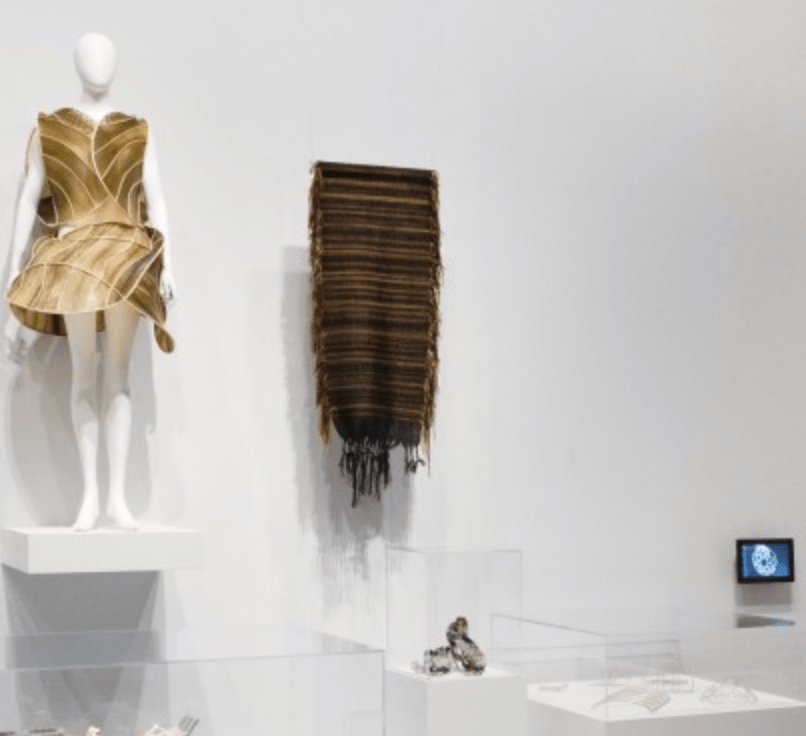
This is the seaweed textile shown at the Philadelphia Art Museum. It is a shawl/scarf made almost completely out of seaweed. The main purpose of this invention is to reduce the amount of water that goes into producing a piece of clothing.
Seaweed Textile, 2019, by Violaine Buet. Photo by Juan Arce, courtesy Philadelphia Museum of Art, 2019.
Found at the exhibition as well, the PhoeniX Exoskeleton is another remarkable invention that peers into our future. It is a robotic suit powered by batteries that are held in the back. Undeniably empowering, this robot-operated machine can help disabled people walk. The exoskeleton is a creation like never before. One of the biggest problems among disabled people is the inability to walk. The creator, Homayoon Kazerooni of the University of California, Berkely, intended to craft something that would excite the disabled community. Already, this creation has grasped the attention of many who are impaired. It has the potential to reach out to other disabled people in the future, which can solve the problem of immobility. “It gives a better quality of life,” Kazerooni said. Already helping the lives of many, this computerized invention will continue to empower others, giving them a better quality of life.
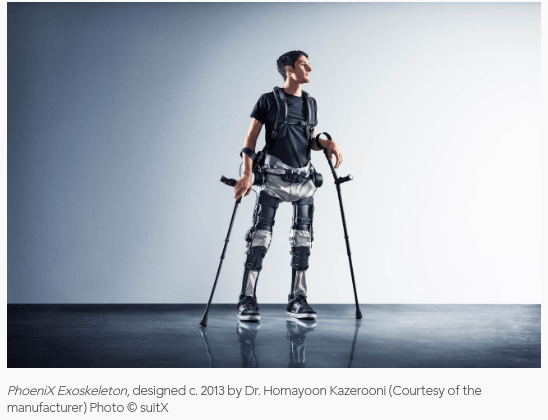
This is an image of the PhoeniX Exoskeleton that was on display at the Philadelphia Art Museum in the Designs for Different Futures exhibit. It is equipped with a battery pack carried around on the back. Two walkers are for the arms of the person. The suit easily slips on to whoever is using it and is adaptable to size. This invention can help disabled people walk.
Another invention created through big dreaming is “Invisible”–a young female’s problem-solving response to stolen DNA. The product is on display among many other monumental devices at the Designs for Different Futures exhibit. Your DNA can be found on your cups, hair, and even chewing gum, to later be stolen and cloned, tracked, or analyzed. The creator of Invisible, Heather Dewey Hagborg, was first alarmed about these dangers when her curious colleague experimented with DNA. He found gum, cups, and hair off of the raging streets of New York and used the data to recreate the faces of people. To Heather’s surprise and concern, the recreations were almost entirely accurate. She created her problem-solving invention with the intention of protecting from DNA thieves. Invisible is a life-changing discovery that was sparked through problem-solving and big dreams for the future of DNA protection.
How will Invisible benefit the future of DNA protection? Invisible is an invention with the potential to end the problem of DNA thieves globally. It is a two part system, consisting of the “erase” and the “replace” sprays. The “erase” spray removes 99.5% of DNA remaining on a surface, and the “replace” spray blurs the other .5%. With its one-of-a-kind ability to erase DNA, Invisible has the potential to end the problem of stolen DNA. Stolen DNA is a startling thing alone, but thieves might take this data and track, analyze, or clone you. This could lead to tremendous disasters that would damage the lives of many. When Heather Dewey Hagborg formulated Invisible, she dreamed big and solved a large problem that would otherwise harm our future. Many problems will arise in our future, and Invisible is just one response to a problem that will change our future.
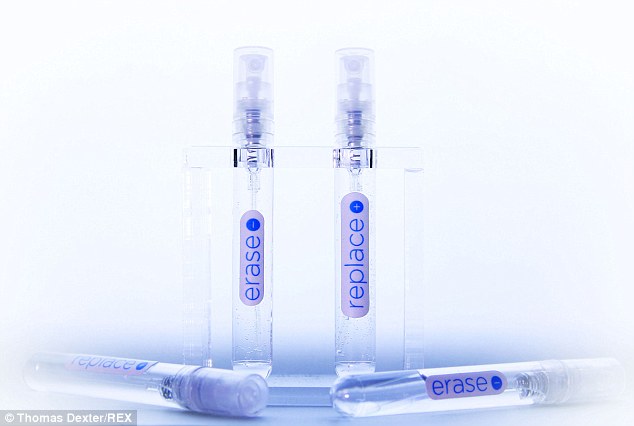
This is Invisible, the DNA removing spray that was on display at the Philadelphia Art Museum. The bottle to the left shows “erase,” the spray that removes 99.5% of DNA left behind. The bottle on the right is “replace,” the spray that obfuscates the remaining .5% of DNA left behind. This invention has the potential to protect from DNA thieves.
Many think of the future as a place with enormous buildings, hovering cars, and robot-operated jobs. The Designs for Different Futures exhibit featured at the Philadelphia Art Museum made us, my class, view the future differently. It gave us a new, refined perspective on how inventions will seem in years to come. The inventions were more focused on being problem-solving than being bigger, better, or more advanced. They all were made through big, limitless dreams to change the world. The monumental inventions displayed at the exhibit were crafted to solve-problems, offer new ideas, and make things easier for us. The Designs for Different Futures exhibit featured at the Philadelphia Art Museum displayed new inventions that were made from big dreams to solve problems and make the future a better place.
 Problem Solving & Dreaming Big in History: Making Philadelphia