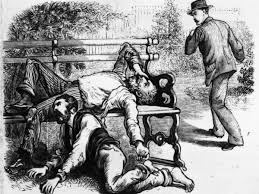
Yellow Fever- a roaring, life-threatening epidemic that affected thousands of 18th-century people. But how did the Fever come to be; how did our people respond to the Fever?

In the seventeenth century, the earliest, less-fatal strains of Yellow Fever arose in Saint Domingue in the Carribean, South to the U.S. At this time, the Fever didn’t spread much, and symptoms weren’t examined enough for it to be brought to anyone’s immediate attention. In the 1700s, Europeans came to the Carribean and were confronted with a new strain of the disease; consequently, people became aware of this widespread illness. In Saint Domingue 1791, the revolution of slaves began, war erupted between the French and British, and more Europeans transmitted Yellow Fever. People became aware and are recognizing the Fever as its deadliness ignites. If only a little sooner, they could have lessened the chances of more deaths.
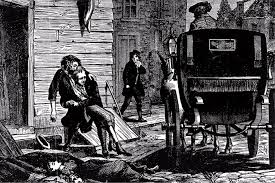
In the early 17th century, people didn’t expect an epidemic as severe as 1793; however, everything only got worse from there. In 1792, the worst and most deadly strain of the Fever was located to be in South Africa, a focal point for diseases at the time. Unaware of what was to come, the British evacuated their homeland to colonize there. Inevitably, they were exposed to Yellow Fever. They go to the Carribean in hopes of relieving the Fever, but just expose them to the horrible strain. Next, the French left Saint Domingue after the war and traveled to Philadelphia. They exposed many people to this horrific strain and sent the city into disruption.
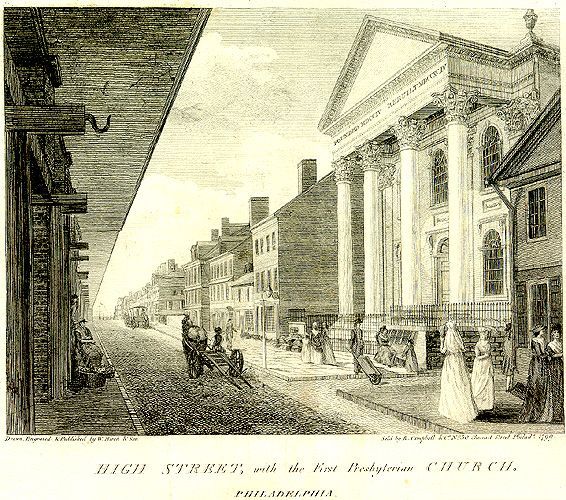
After a few months, Philadelphians began to recognize this problem because of the number of deaths lost to this “epidemic”; doctors and nurses began to investigate. Immediately, they assumed that it was due to miasma: the stench of the rotten coffee coming in on ports. Others suspected that it was brought in by cargo; others thought it was by incoming slaves.

After many years of research and knowledge, Yellow Fever is now known to be a disease that is spread indirectly by mosquitoes. The bug spreads the virus by biting someone already exposed to the fever, to then bite another person exposing them to the infection. When the French came to Philadelphia with the Fever, the mosquitoes did just that; this lead to a growing epidemic.
Large bodies of water and humidity are necessary to create ideal breeding grounds for mosquitoes; all of the places where Yellow Fever arose show a perfect climate for the bug. When bugs that are exposed to Yellow Fever breed new mosquitoes, the newborn is pre-exposed to the infection. Water makes for better breading, and more infected bugs. The Delaware and Schuylkill surrounded Philadelphia at the time of the Fever, and the hot August climate attracted the insect; the Carribean and West Africa suffered the consequences as well. This made the susceptibility of transmitting Yellow Fever in these areas common, turning the Yellow Fever epidemic into a widespread “conflagration” of a disease.
 Problem Solving & Dreaming Big in History: Making Philadelphia